Rowenta Iron User Manual: A Comprehensive Guide
Welcome! This manual provides essential guidance for your Rowenta iron, ensuring optimal performance and longevity. Rowenta delivers innovative solutions, blending technology with elegant design for superior results.
Congratulations on choosing a Rowenta iron! For over 140 years, Rowenta has been dedicated to providing innovative home appliance solutions, combining advanced technology with user-friendly design. Your new iron is engineered to deliver exceptional ironing performance, making garment care easier and more efficient.
This iron is designed for a wide range of fabrics, offering versatile temperature and steam settings to meet your specific needs. Rowenta prioritizes quality and durability, ensuring your iron will provide years of reliable service. Before first use, please carefully read this manual to fully understand its features and operating instructions.
Rowenta’s commitment extends beyond functionality; they strive to create products that enhance your daily life. Explore the features and enjoy the convenience of a perfectly ironed wardrobe with your new Rowenta iron!
Unpacking and Initial Inspection
Carefully remove your Rowenta iron and all included accessories from the packaging. Inspect the iron for any visible damage that may have occurred during shipping. This includes checking the soleplate for scratches, the handle for cracks, and the power cord for fraying or cuts.
Ensure all packaging materials are removed from the iron itself, including any protective films or stickers. Verify that you have received all components listed in the included documentation. Retain the original packaging for potential future transport or warranty claims.
If any damage is detected, do not use the iron. Contact Rowenta customer support immediately for assistance and guidance on returning or exchanging the product. Proper initial inspection ensures safe and optimal operation from the start.
Safety Precautions
Important: Always disconnect the iron from the power outlet when not in use and before filling or emptying the water tank. Never immerse the iron in water or any other liquid. To avoid electric shock, do not operate the iron with a damaged cord or plug.
Keep the iron out of reach of children. The soleplate becomes extremely hot during use; avoid touching it. Allow the iron to cool completely before storing. Use only on a stable, heat-resistant surface.
Never leave the iron unattended while plugged in. Be cautious of steam, as it can cause burns. Do not use the iron for anything other than its intended purpose – ironing fabrics. Ensure the electrical outlet is properly grounded. Failure to follow these precautions may result in injury or damage.
Understanding Your Rowenta Iron Features
Explore! Discover the advanced functionalities of your Rowenta iron, including the water tank, temperature controls, and steam settings, designed for optimal ironing performance.
Water Tank and Filling Instructions
Filling the Water Tank: Your Rowenta iron utilizes water to generate steam, crucial for effective ironing. Always unplug the iron before filling or emptying the water tank. Open the water tank filler cap and carefully pour water into the tank, avoiding overfilling – the maximum fill line is clearly marked.
Water Quality Matters: Rowenta strongly advises against using certain water types. Avoid water from clothes dryers, scented or softened water, refrigerators, air conditioners, rain water, or previously boiled, filtered, or bottled water. These contain substances that can cause spitting, brown staining on garments, or premature appliance wear.
Recommended Water: Use distilled or demineralized water for the best results and to prolong the life of your iron. This minimizes mineral buildup within the steam system. Regularly check the water level during use and refill as needed for continuous steam.
Temperature Control Settings
Understanding the Dial: Your Rowenta iron features a temperature control dial, essential for selecting the appropriate heat level for different fabric types. The dial is typically marked with fabric symbols (e.g., linen, cotton, silk, synthetic) and corresponding temperature ranges.
Fabric-Specific Settings: Always refer to the care label on your garments. Start with a lower temperature setting and gradually increase it if needed. Delicate fabrics like silk require low heat, while sturdy fabrics like linen demand higher temperatures for effective wrinkle removal.
Steam & Temperature Coordination: Optimal ironing often involves coordinating temperature with steam output. Higher temperatures generally require more steam. Ensure the iron has reached the selected temperature before applying it to fabric, and always test a small, inconspicuous area first.
Steam Functionality: Adjusting Steam Levels
Steam Control Dial/Buttons: Rowenta irons offer adjustable steam levels, typically controlled via a dial or buttons. These settings range from ‘no steam’ to ‘maximum steam’, catering to diverse fabric needs.
Fabric-Specific Steam: Delicate fabrics often benefit from minimal or no steam to prevent damage. Heavier fabrics like cotton and linen require higher steam output for effective wrinkle removal. Experiment to find the optimal setting for each garment.
Water Quality & Steam: Using appropriate water types (distilled or demineralized) is crucial for consistent steam production and preventing mineral buildup. Avoid water from dryers, scented water, or boiled/filtered water, as these can cause spitting or staining.
Steam Boost Feature: Some models include a ‘steam boost’ function for tackling stubborn wrinkles. Use this sparingly, as it consumes more water.
Using Your Rowenta Iron
Get Started! Ensure your iron is clean, filled with appropriate water, and set to the correct temperature for your fabric type before beginning ironing.
Preparing the Iron for Use
Initial Setup: Before your first use, remove all packaging materials and ensure the iron is clean. Carefully inspect the soleplate for any debris or residue. Fill the water tank with the recommended water type – avoid using water from dryers, scented/softened sources, refrigerators, air conditioners, rain, or boiled/filtered/bottled water, as these can cause spitting, staining, or damage.
Water Level: Do not overfill the tank; adhere to the maximum fill line indicated. Proper water levels are crucial for optimal steam functionality.
Temperature Selection: Plug the iron into a grounded electrical outlet. Select the appropriate temperature setting based on the fabric you intend to iron. Refer to the fabric care label for guidance. Allow the iron to heat up completely before use – the indicator light will signal when it’s ready. A properly prepared iron ensures efficient and safe ironing.
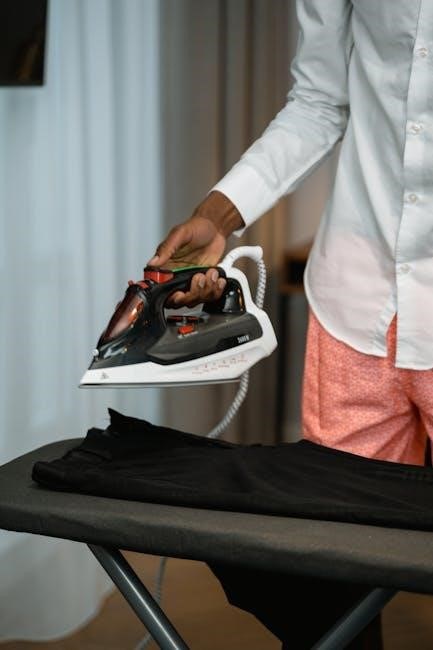
Ironing Different Fabric Types
Fabric Guide: Always check the garment’s care label for ironing instructions. Start with lower temperature settings for delicate fabrics like silk or synthetics, gradually increasing the heat as needed. For cotton and linen, use higher temperature settings with steam for best results.
Synthetic Fabrics: Use a lower temperature and avoid prolonged contact, as these fabrics can melt or scorch easily. A dry iron setting is often recommended.
Natural Fabrics: Cotton, linen, and wool benefit from steam and higher temperatures. Dampen stubborn wrinkles with a spray bottle for easier ironing. Always test a small, inconspicuous area first to ensure the fabric reacts well to the heat and steam. Proper fabric selection and temperature control prevent damage and ensure professional-looking results.
Vertical Steam Feature: How to Use
Refreshing Garments: The vertical steam feature is ideal for quickly removing wrinkles from hanging clothes, curtains, or upholstery. Ensure the water tank is filled and the iron is heated to the appropriate temperature setting for the fabric type.
Steaming Technique: Hold the iron vertically, a few inches away from the garment. Gently press the steam button and move the iron up and down in a sweeping motion. Avoid direct contact with the fabric to prevent scorching.
Safety & Effectiveness: Be cautious of hot steam. Use this feature in a well-ventilated area. For best results, use a consistent, slow pace. This method is excellent for delicate items that shouldn’t be directly ironed, offering a convenient wrinkle-release solution.

Maintenance and Cleaning
Preserving Performance: Regular maintenance, including descaling and soleplate cleaning, is crucial for extending your Rowenta iron’s lifespan and ensuring optimal steam output.
Descaling Your Rowenta Iron
Maintaining Steam Performance: Over time, mineral deposits from water can build up inside your Rowenta iron, hindering steam production and potentially damaging the appliance. Descaling removes these deposits, restoring optimal functionality. While not needed for steam generators (though rinsing the boiler every 10 uses is recommended), regular descaling is vital for standard irons.
Rowenta recommends using a descaling solution specifically designed for steam appliances. Follow the solution’s instructions carefully. Typically, this involves filling the water tank with the descaling solution, heating the iron to a high temperature, and then steaming until the solution is depleted. Afterwards, rinse the tank thoroughly with clean water, repeating the steaming process several times to eliminate any remaining residue. Ignoring descaling can lead to spitting, brown staining on clothes, and reduced iron lifespan.
Recommended Water Types & Avoiding Damage
Protecting Your Investment: The quality of water used significantly impacts your Rowenta iron’s performance and longevity. Avoid using water sourced from clothes dryers, scented or softened water, refrigerators, batteries, or air conditioners. Rainwater, boiled, filtered, or bottled water are also unsuitable, as they often contain impurities.
These water types harbor organic waste, minerals, and chemical elements that can cause spitting, unsightly brown staining on your garments, and accelerate wear and tear on the internal components of your iron. For best results, consistently use distilled or demineralized water. This minimizes mineral buildup, ensuring smooth steam production and preventing potential damage. Utilizing appropriate water safeguards against premature failure and maintains optimal ironing performance.
Cleaning the Soleplate
Maintaining a Smooth Glide: A clean soleplate is crucial for effortless ironing and preventing marks on your clothes. Always unplug the iron and allow it to cool completely before cleaning. Gently wipe the soleplate with a soft, damp cloth. For stubborn residues, a specialized soleplate cleaner designed for Rowenta irons is recommended.
Avoid abrasive cleaners, scouring pads, or harsh chemicals, as these can scratch or damage the soleplate’s coating. Do not use vinegar or bleach. If buildup persists, create a paste of baking soda and water, apply to the cooled soleplate, and gently rub before wiping clean. Regular cleaning ensures optimal performance and prevents the transfer of unwanted marks onto your fabrics, preserving the life of your iron.
Troubleshooting Common Issues
Addressing Problems: This section offers solutions for typical issues like heating problems, leaks, or staining, helping you quickly resolve them and continue ironing efficiently.
Iron Not Heating Up
Possible Causes & Solutions: If your Rowenta iron isn’t heating, first ensure it’s properly plugged into a functioning outlet. Check the power cord for any visible damage – do not use if frayed! Verify the temperature dial is set to the desired heat level and isn’t on the ‘off’ or ‘minimum’ setting.
Safety Features: Some models have an automatic shut-off feature that activates after a period of inactivity. Gently move the iron to reactivate it. If the issue persists, the internal thermostat might be faulty, requiring professional repair. Avoid attempting self-repair, as this could void the warranty and pose a safety risk.
Further Checks: Confirm the iron’s indicator light illuminates, signaling power. If not, the heating element itself may be defective. Contact Rowenta customer support for assistance or to explore repair options. Always unplug the iron before troubleshooting.
Water Leaking from the Iron
Identifying the Source: Water leakage from your Rowenta iron can stem from several causes. First, ensure the water tank isn’t overfilled; exceeding the maximum fill line can lead to spillage. Check the tank for cracks or damage, and avoid using water sourced from clothes dryers, scented or softened water, or appliances like refrigerators – these contain impurities.
Steam Settings & Blockages: Verify the steam setting isn’t set too high for the fabric you’re ironing. A blocked steam vent can also cause leakage. Regularly descale your iron to prevent mineral buildup, which restricts steam flow.
Proper Usage: When using the vertical steam feature, hold the iron upright to prevent water from escaping. If leakage continues, contact Rowenta support for guidance or potential repair.
Brown Staining on Clothes
Understanding the Cause: Brown staining on garments typically indicates mineral deposits from the water used in your Rowenta iron. Impurities found in water sources like clothes dryers, softened water, or even boiled water can accumulate within the iron and transfer to fabrics during steaming.
Preventative Measures: To avoid this, always use distilled or demineralized water. Regular descaling is crucial – it removes mineral buildup that causes staining and spitting. Avoid water from refrigerators, air conditioners, or rain, as these contain problematic elements.
Addressing Existing Stains: If staining occurs, reduce the iron’s temperature and use a clean, damp cloth to wipe the soleplate. For stubborn stains on clothes, consult a fabric care specialist.
Advanced Features & Tips
Maximize your ironing experience! Explore self-cleaning functions and optimal techniques for flawless results. Consistent care extends your Rowenta iron’s lifespan significantly.
Self-Cleaning Function (if applicable)
Maintaining peak performance is crucial. Some Rowenta irons feature a self-cleaning function designed to remove mineral buildup from the steam vents. This process typically involves filling the water tank, setting the iron to a high steam setting, and activating the cleaning cycle – consult your specific model’s instructions for precise steps.
Regular cleaning prevents spitting and staining. The self-cleaning function flushes out loose mineral deposits, ensuring a consistent steam flow and preventing brown staining on your garments. It’s recommended to perform this cleaning cycle periodically, especially if you notice a decrease in steam output or residue appearing during ironing.
Important Note: Not all Rowenta irons have this feature. Always refer to your iron’s user manual to determine if a self-cleaning function is available and to follow the correct procedure. Improper use could potentially damage the appliance.
Optimal Ironing Techniques
Achieving professional results requires technique. Begin by sorting laundry by fabric type, starting with lower temperature settings for delicate materials like silk and gradually increasing for heavier fabrics like cotton and linen. Utilize the steam function appropriately – more steam for stubborn wrinkles, less for sensitive fabrics.
Ironing efficiency is key. Iron clothes while slightly damp for easier wrinkle removal. Use an ironing board with a clean cover to prevent staining or transferring unwanted marks. Avoid overcrowding the ironing board; focus on one garment at a time for best results.
Protect your iron and clothes. Always empty the water tank after each use to prevent mineral buildup; Consider using distilled or demineralized water to further minimize scaling and prolong the life of your Rowenta iron.
Extending the Life of Your Rowenta Iron
Regular maintenance is crucial for longevity. Avoid using water sources containing minerals or impurities – like those from dryers, softeners, or air conditioners – as these can cause spitting, staining, and premature wear. Opt for distilled or demineralized water whenever possible to minimize scale buildup within the boiler.
Descaling is preventative care. While not always needed for steam generators, rinsing the boiler every 10 uses (as per the manual) helps maintain optimal performance. Consistent cleaning of the soleplate prevents residue buildup and ensures smooth gliding.
Proper storage matters. Always empty the water tank after each use and allow the iron to cool completely before storing. Store in a cool, dry place to prevent corrosion and ensure your Rowenta iron remains a reliable appliance for years to come.